When Module Cloning Works and Why It Fails
By Mike Lundgren
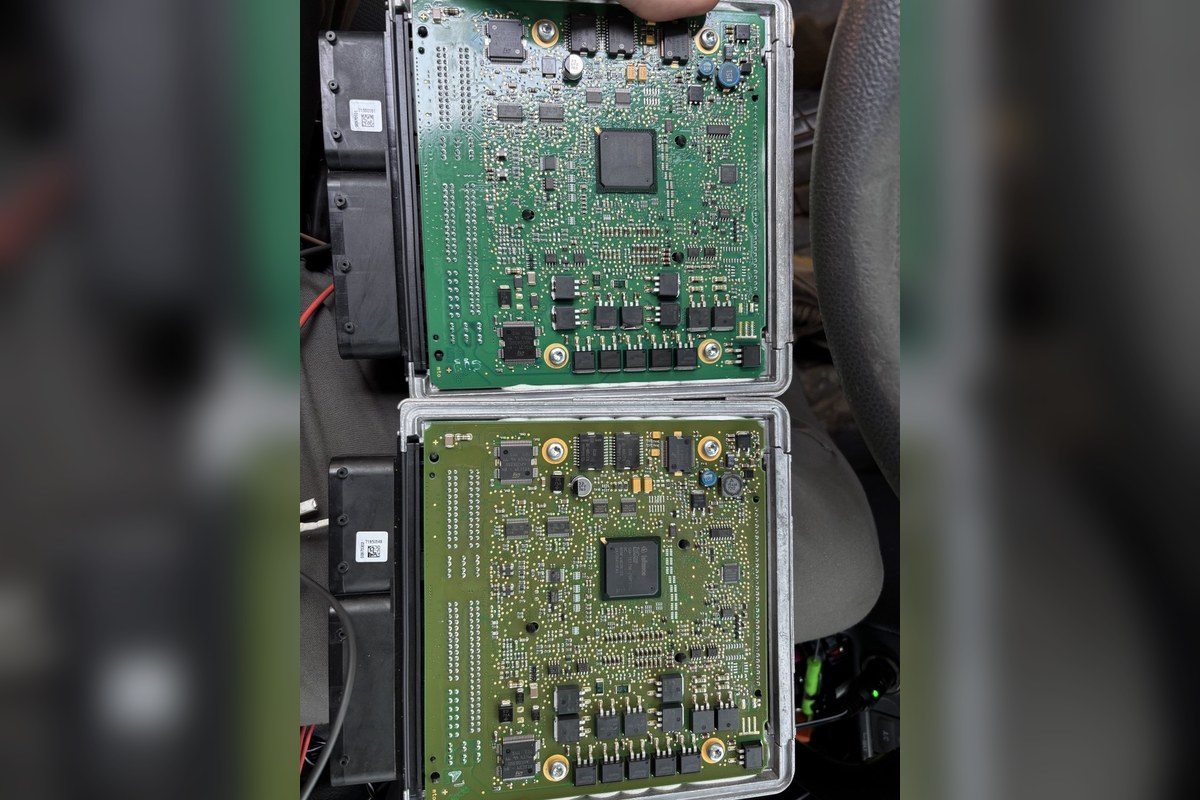
Module cloning can be the difference between saving a vehicle and telling the customer there is no good repair path.
When new modules are backordered, discontinued, or priced beyond what makes sense for the vehicle, shops naturally start looking at used parts. Sometimes that works. Sometimes a used ECM, TCM, BCM, or transmission module can be cloned, installed, and the vehicle leaves with no drama.
Other times, the same basic idea turns into a long, expensive dead end.
That is the part that matters most: module cloning is not magic. It is a repair strategy that depends on the vehicle, the module, the data inside the original unit, the replacement hardware, and the tool being used.
What Module Cloning Actually Means
Module cloning means copying critical data from the original control module into a replacement module. Depending on the vehicle and module, that data may include:
- VIN information
- immobilizer or security data
- EEPROM data
- flash memory
- coding and configuration
- calibration or learned values
- module identity information
That is different from standard factory programming.
Standard programming usually loads software or calibration files into a module. Cloning is more about preserving the unique information that makes that module belong to that specific vehicle.
That distinction is why a used module may fail with normal programming but work after cloning. It is also why a cloning attempt may fail even when the replacement part looks correct.
Why Shops Look at Cloning
Most shops do not choose cloning because they want to make a job complicated. They choose it because the normal path is blocked.
Common reasons include:
- the new OE module is on backorder
- the module is discontinued
- the customer cannot justify the cost of a new part
- the vehicle is down and the shop needs another option
- a used transmission or engine controller is already installed
- factory software will not program a used module
In those situations, cloning can be a practical tool. It gives the shop a possible way to use a matching used module when factory programming alone is not enough.
But the decision should be made before the part is installed whenever possible.
When Cloning Has a Better Chance
Module cloning usually has the best chance when the original module still communicates.
If the original module can be read, the important data can often be saved before anything else happens. That gives the technician a baseline. Even if the job gets complicated, the original data is not lost.
Cloning also has a better chance when:
- the replacement module has the same part number or hardware family
- the module is a type that is supported by the available tooling
- the donor module is not physically damaged
- the failure in the original module is not caused by corrupted data that will transfer to the donor
- the technician understands whether EEPROM, flash, or both need to be copied
- the vehicle architecture allows the module to be adapted after cloning
Engine and transmission controllers are common cloning candidates because many aftermarket programmers support them. Some GM ECMs and TCMs, certain European modules, and some transmission control units can be good candidates when the hardware and data path are correct.
Why Cloning Fails
Cloning fails when the assumption is wrong.
Sometimes the used module is not actually compatible. The connectors may fit, but the hardware, software family, processor, memory layout, or vehicle options may not match. A module can look right on the bench and still be wrong for the vehicle.
Sometimes the original module cannot be read. If the original unit is completely dead, water-damaged, physically damaged, or internally shorted, the data needed for cloning may not be recoverable.
Sometimes the bad data is the problem. If the original module contains corrupted flash or damaged EEPROM information, copying that data into the donor may copy the problem too.
And sometimes the tool simply does not cover that application, even if the marketing material makes it sound like it should.
That is why experience matters. A tool list is not the same thing as a proven repair path.
Tool Choice Matters
Different cloning tools are good at different things.
Some tools are strong for engine and transmission controllers. Some are better for GM applications. Some handle certain Mercedes, BMW, Nissan, Ford, or Chrysler modules well but are weak in other areas. Some require bench work. Some need boot mode access. Some require opening the module and connecting directly to the board.
A tool that works perfectly on one module family may be the wrong choice for the next vehicle.
That does not make the tool bad. It just means module cloning is application-specific work. The repair depends on matching the vehicle, module, and method correctly.
Examples of Different Outcomes
A used transmission module may clone cleanly and work immediately after installation. A GM module may clone successfully with the right equipment and become plug-and-play. A Mercedes transmission control module may be a strong candidate because new parts are expensive and cloning support exists.
On the other hand, a Nissan ECM may require board-level work depending on the year and immobilizer strategy. A BMW transmission controller may require the right connector, tool, and access method. A module with internal software corruption may duplicate the same fault into the replacement unit if the wrong data is copied.
These are all module cloning jobs, but they are not the same job.
That is why blanket answers like “yes, used modules can be cloned” or “no, used modules never work” are both wrong.
The right answer is: it depends on the exact module and the exact failure.
Programming Is Still Part of the Job
Cloning does not always eliminate programming.
In some cases, cloning gets the module close enough that the vehicle can communicate and operate, but factory software is still needed for setup, configuration, immobilizer functions, learned values, or final calibration.
In other cases, factory programming should be done first and cloning should be avoided. Some modules are better handled through OE procedures when those procedures are supported and the replacement part is correct.
The best repair path is not automatically the most advanced one. It is the one that gets the vehicle working reliably with the least unnecessary risk.
What Shops Should Do Before Installing a Used Module
Before ordering or installing a used control module, slow down and answer a few questions.
-
What module is being replaced?
ECM, TCM, BCM, RF hub, steering rack, ABS module, and transmission controllers all have different rules. -
Does the original module still communicate?
If it does, save the data before the situation changes. -
Is the donor module truly compatible?
Match the part number, hardware family, connector style, and application details as closely as possible. -
Is this a factory programming job or a cloning job?
Do not assume factory software can make every used module work. -
Could the original data be corrupted?
If the original module has a software or memory problem, blindly copying everything may duplicate the failure. -
What happens if the clone fails?
Have a backup plan before the vehicle is apart and the customer is waiting.
The Best Time to Ask Is Before the Part Is Installed
The easiest module cloning job is the one that gets planned before the shop buys the wrong part.
Once a used module is installed, the vehicle is disabled, and the customer is expecting a quick programming visit, options get narrower. Sometimes the answer is still yes. Sometimes the module can be cloned, configured, and finished. But sometimes the part choice already boxed the repair into a corner.
At ST Mobile Auto, we help shops sort this out before the job turns into a guessing game. We can help determine whether a used module is a realistic candidate, whether cloning is likely required, and whether the original module needs to be preserved for data recovery.
Need Help With Module Cloning?
If your shop is dealing with a used ECM, TCM, BCM, transmission module, RF hub, or other replacement control module, contact ST Mobile Auto before installing the part.
We provide mobile module programming and diagnostic support for shops across the Twin Cities area, including used-module evaluation, programming, setup, and cloning guidance when the application supports it.
Need Help With This?
We handle jobs like these every day for shops across the Twin Cities.