Nitrogen-filled air suspension systems are becoming increasingly common on Stellantis (Jeep, Ram, Dodge, Chrysler), GM, and Volvo vehicles. These systems require nitrogen charging when severely depleted or after component replacement, and shops can set up to perform this service for under $400 in equipment costs.
How Nitrogen Air Suspension Systems Work
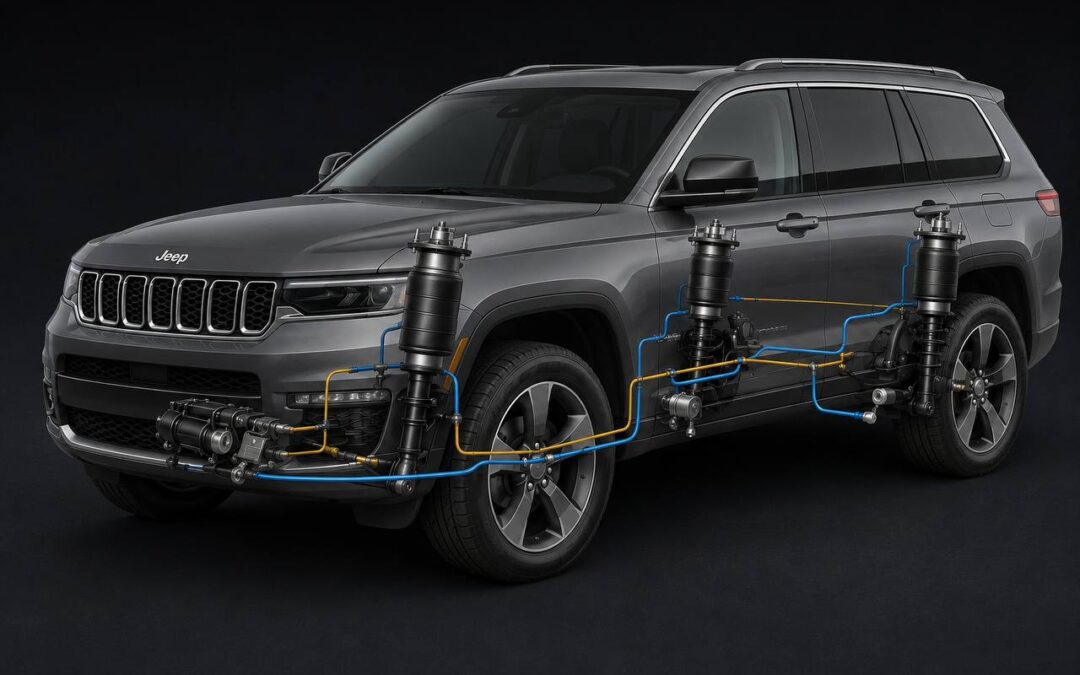
Unlike traditional air suspension systems, nitrogen-filled systems feature an aluminum air tank reservoir that maintains approximately 175-200 PSI of pressure at all times. This pre-charged system allows for quick filling because pressure is available on demand, rather than relying solely on the compressor to build pressure.
The air compressor in these systems doesn’t build the primary pressure needed to raise or lower the vehicle. Instead, it assists in moving pressure from one location to another within the system. When the system is severely low or empty, the compressor cannot rebuild the necessary pressure – external nitrogen charging is required.
Common Vehicles with Nitrogen Air Suspension
- Jeep Grand Cherokee (most common application)
- Jeep Wagoneer
- Dodge Ram trucks
- 2021+ GMC Yukon
- Volvo XC60 and other SUV platforms
Equipment Needed for Nitrogen Air Suspension Service
Setting up for nitrogen air suspension service requires minimal investment. The fill fitting uses a standard 134A connection, so shops can purchase a quick coupler for the low side of a 134A system.
Required Equipment:
- Nitrogen tank with regulator and gauges
- Hose set with quick disconnects (Dorman makes a complete kit)
- Factory scan tool capability (aftermarket tools often fail)
- 134A quick coupler fitting
Total setup cost is typically under $400, which can be recovered in one or two jobs.
Nitrogen Charging Procedure
The charging process requires setting the regulator to the specific pressure for each vehicle application. Jeep Grand Cherokees typically use 175 PSI, while newer Jeep Wagoneers and GMC Yukons may require over 200 PSI. Always consult service information for the correct pressure specification.
Step-by-Step Process:
- Set regulator to vehicle-specific pressure (found in service information)
- Connect to air tank reservoir and fill to specified pressure
- Use scan tool to fill each air spring individually
- Run air mass check to verify system pressure
- Add more nitrogen if needed based on air mass results
- Repeat air mass check until system shows “OK”
Warning: Overcharging can cause lines to burst or damage air springs. Never exceed the manufacturer’s specified pressure.
Scan Tool Requirements
Factory scan tools provide the most reliable results for nitrogen air suspension service. Aftermarket tools often fail to properly communicate with air suspension control modules.
Recommended Tools by Platform:
- Stellantis vehicles: WiTech (aftermarket tools unreliable on newer models)
- GM vehicles: GDS2 (Autel and TopDown unsuccessful in testing)
- Volvo vehicles: Vida (limited aftermarket options)
Common Air Suspension Issues
Compressor Failure
Air compressors commonly fail due to overheating from excessive cycling. Symptoms include compressor running but not building pressure. This requires compressor replacement and system recharging.
Leak Points
Ram trucks frequently develop leaks at the fill port fittings above the right rear frame rail. Check both ports with soapy water when system has pressure – O-ring replacement often solves the issue.
Check Valve Problems
A critical issue involves the check valve in each air spring’s top fitting. This valve allows air into the spring but prevents air from escaping when the line is disconnected. Problems occur when:
- The air line doesn’t properly displace the check valve due to fitting collar sliding down
- Aftermarket springs sit too low, requiring technicians to stack check valves
- Improper installation prevents the check valve from functioning correctly
When check valves malfunction, air can enter the spring but cannot exit, causing the corner to remain elevated and preventing proper system operation.
What This Means for Your Shop
Nitrogen air suspension service represents a profitable opportunity for shops seeing these vehicles. With minimal equipment investment, shops can offer complete air suspension charging services rather than referring customers to dealerships.
The service pays for itself quickly – shops can charge for the nitrogen fill service while also diagnosing and repairing the underlying issues causing system depletion. This creates multiple revenue streams from a single customer visit.
Understanding these systems also prevents comebacks from improper service procedures, particularly the check valve issues that can cause hours of diagnostic time if not recognized.
Professional Air Suspension Service in the Twin Cities
ST Mobile Auto provides on-site nitrogen air suspension charging and diagnostic services throughout the Minneapolis and St. Paul metro area. Our mobile service brings factory-level scan tools and nitrogen charging equipment directly to your shop, eliminating the need for your own equipment investment.
We specialize in diagnosing complex air suspension issues, including the check valve problems that can cause extended diagnostic time. Our team understands the nuances of Stellantis, GM, and Volvo nitrogen air suspension systems.
Contact ST Mobile Auto at (612) 355-9566 for air suspension service, or submit a service request at https://stmobileauto.com/shop-forms/.