
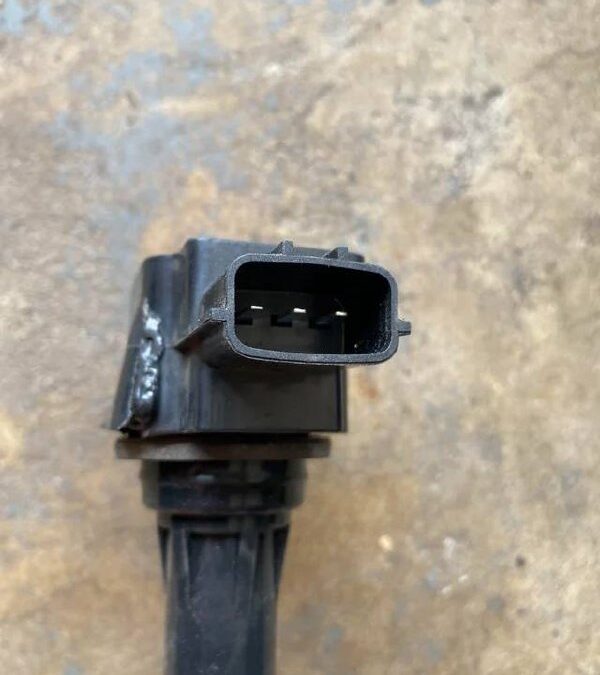
Nissan and Infiniti ignition coils repeatedly melt down due to excessive voltage drop between the negative battery cable and the engine block. This voltage drop, typically 1.5 to 2 volts, creates an elevated ground on the engine block that causes the ECM to hold a constant 5-volt signal to the coil, turning it into a heater that eventually melts the plastic casing and blows the fuse.
The Problem: More Than Just a Bad Coil
When a Nissan or Infiniti comes into your shop with a no-crank, no-communication condition, you might initially suspect a failed ECM. However, if you find a blown fuse that supplies both the ignition coils and the ECM, you’re likely dealing with this specific ground-related issue.
The pattern is consistent: replace the coil, and it works fine for days or weeks before melting down again. Sometimes it’s the same coil, sometimes a different one. This has been documented across multiple platforms including:
- 2018 Nissan Armada (5.6L V8)
- 2007 Infiniti M35 (3.5L V6)
- 2014 Nissan Versa (1.6L 4-cylinder)
The problem spans at least 10 years of production and affects multiple engine configurations, indicating this isn’t isolated to a single platform.
Why This Happens on Nissans But Not Other Brands
Other manufacturers experience ground cable corrosion—Chevy Silverados are notorious for negative cable issues—but they don’t experience melting coils. The difference lies in how Nissan designs their ignition systems.
Nissan uses three-wire coils with:
- Constant power feed
- Constant ground connection to the engine block
- Signal wire from the ECM (switches to 5 volts to activate)
The critical factor is that the ignition coils ground to the engine block while the ECM grounds to the chassis. When there’s voltage drop on the engine block ground connection, you create different ground references between the ECM and the coils.
The Technical Explanation
When the engine block has an elevated ground (1.5-2 volts above battery negative), something in the ECM’s coil driver circuit malfunctions. Instead of sending normal 5-volt pulses to fire the coil, the ECM holds a constant 5-volt signal on the control wire.
This constant signal keeps the transistor inside the coil activated, continuously grounding the primary winding. With constant power and constant ground, the coil becomes a heater element that eventually melts the plastic housing and creates a short circuit.
Interestingly, this voltage drop typically isn’t severe enough to affect starter operation—these vehicles usually start and run normally until the coil fails.
Diagnosis and Testing
To confirm this diagnosis:
- Check for voltage drop between battery negative and engine block with key on, engine running
- Look for 1.5-2 volts of drop (this is excessive)
- Inspect the negative cable connection at the engine block for corrosion or looseness
- On some models, check the engine block to chassis ground strap
The good news is that the ECM typically doesn’t suffer permanent damage from this condition, unlike some Ford applications where coil failures also damage ECM drivers.
What This Means for Your Shop
This is a diagnostic challenge that requires understanding both the electrical system and the specific quirks of Nissan/Infiniti design. Simply replacing coils without addressing the root cause will result in comebacks and frustrated customers.
Key points for shop owners:
- Always check ground connections when dealing with melted Nissan/Infiniti coils
- Don’t assume the ECM is damaged—it usually recovers once the ground issue is fixed
- This problem can appear on models without specific TSBs, so don’t rely solely on documented cases
- Proper diagnosis prevents costly comebacks and builds customer trust
Expert Diagnosis and Repair
Complex electrical issues like this require advanced diagnostic skills and proper testing equipment. ST Mobile Auto provides comprehensive electrical diagnostics on-site at your shop throughout the Twin Cities metro area. Our team has extensive experience with Nissan and Infiniti electrical systems and can help you quickly identify the root cause of recurring coil failures.
Whether you need on-site diagnostic support or consultation on challenging electrical problems, we’re here to help your shop succeed.
Contact ST Mobile Auto:
Phone: (612) 355-9566
Request Service