
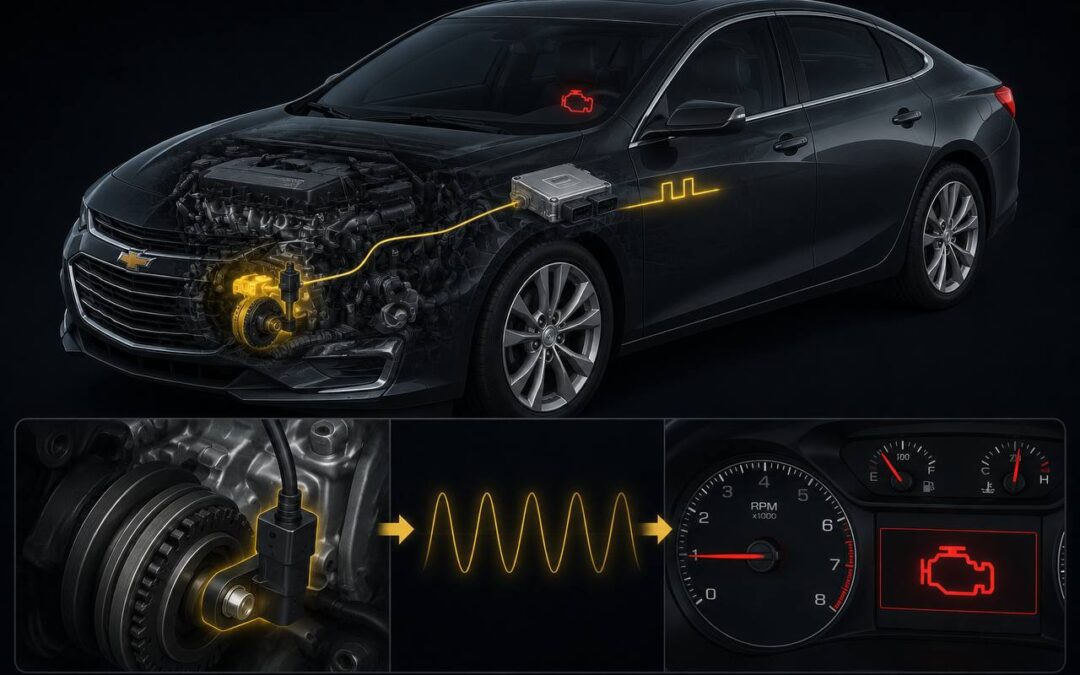
When a 2017 Chevrolet Malibu with a 1.5L turbo engine presents with no power steering, charging system failure, and stalling when put in gear – all without setting any diagnostic codes – the issue is likely a wrong crankshaft position sensor. This specific combination of symptoms points to an auto stop-start crankshaft sensor problem that can leave technicians scratching their heads.
The Symptom Pattern That Points to Crankshaft Sensor Issues
This diagnostic challenge presents a very specific set of symptoms that occur together:
- Starter dragging: On push-button start vehicles, the starter continues to drag against the flexplate after releasing the start button
- No electric power steering: Complete loss of power steering assist
- Charging system failure: Voltage remains at 12V instead of the normal 14+ volts
- Electrical accessories inoperative: Rear defrost and heated seats won’t function
- Idle surge: Engine surges every 30-40 seconds
- Stalls in gear: Engine stalls when transmission is shifted from park
- No diagnostic codes: Scanner shows no fault codes anywhere in the vehicle
The engine will start and run in park, making this particularly confusing since many systems appear to function normally at first glance.
Auto Stop-Start Crankshaft Sensors: The Critical Difference
The root cause lies in the difference between standard crankshaft position sensors and those designed for auto stop-start systems. GM vehicles with auto stop-start capability (RPO code KL9) require a specific crankshaft sensor that can detect not only crankshaft position and speed, but also direction of rotation.
The auto stop-start crankshaft sensor contains multiple Hall effect elements that allow the ECM to determine the exact crankshaft position when the engine stops. This precision is crucial for seamless restart when the driver releases the brake pedal.
When the wrong sensor is installed – whether it’s a standard sensor in an auto stop-start vehicle or simply a defective aftermarket part – the ECM receives enough signal to run the engine but doesn’t recognize it as a “successful start.” This puts various vehicle systems into a default state as if the engine isn’t properly running.
Quick Diagnostic Test
Here’s the fastest way to confirm this diagnosis when you encounter these symptoms:
- Turn off the vehicle
- Disconnect the crankshaft position sensor (located below the starter)
- Attempt to start the vehicle
With the sensor disconnected, the engine will:
- Take longer to start (extended crank)
- Set a crankshaft sensor code
- Run on camshaft position signals
- Eliminate all the other symptoms – power steering works, charging system operates normally, accessories function
If disconnecting the crankshaft sensor resolves all the secondary symptoms, you’ve confirmed the sensor is the problem.
The Repair Solution
The fix requires installing the correct crankshaft position sensor for the specific vehicle application. For 2017 Malibu 1.5L engines, all came equipped with auto stop-start, so only one correct sensor part number exists.
Common scenarios where the wrong sensor gets installed:
- Engine replacement where the donor engine had a different sensor
- Aftermarket parts suppliers listing incorrect applications
- Using sensors from similar but non-auto stop-start vehicles
When sourcing the replacement, stick with OEM (ACDelco) or genuine GM parts to ensure proper operation.
What This Means for Your Shop
This type of diagnostic challenge can consume significant shop time if you’re not familiar with the symptom pattern. Technicians might chase individual symptoms – replacing alternators, checking power steering modules, or diagnosing electrical accessories – without recognizing they’re all related to the crankshaft sensor issue.
The key is recognizing this specific combination of symptoms and knowing the quick test to confirm the diagnosis. This allows you to move efficiently to the solution rather than spending hours on individual system diagnosis.
Documentation is crucial for these unusual cases. Recording the specific symptom combinations and their solutions creates a valuable reference for future similar issues, potentially saving hours of diagnostic time.
Need Expert Diagnostic Support?
Complex electrical and engine management issues like this require experience with modern vehicle systems and access to proper diagnostic procedures. ST Mobile Auto provides expert automotive diagnostics and programming services on-site at your shop throughout the Twin Cities metro area.
Our team has extensive experience with GM crankshaft sensor issues, auto stop-start systems, and the complex interactions between engine management and vehicle electrical systems. We can help resolve challenging diagnostic cases and provide the technical support your shop needs.
Contact ST Mobile Auto at (612) 355-9566 or submit a service request at https://stmobileauto.com/shop-forms/ for expert diagnostic support.