Ford Escape 1.6L Turbo Timing Requirements After Head Gasket Work
The 2013-2019 Ford Escape with the 1.6L EcoBoost turbo engine requires a complete 4-piece timing kit when performing head gasket repairs. Missing any component or using incorrect pins will result in timing issues, no-start conditions, or engine knock codes like P130D. These engines are particularly sensitive to timing procedures due to their non-keyed design.
Why Ford Escape 1.6L Engines Are Prone to Head Gasket Issues
The Ford Escape 1.6L turbo engine is notorious for coolant leaks that require head gasket replacement. However, shops need to be aware that head gasket replacement doesn’t always solve the problem. These engines commonly develop cracks in the engine block between cylinder walls and coolant passages, allowing coolant to leak directly into the combustion chamber through the block itself.
When diagnosing coolant consumption on these engines, it’s critical to inspect for block cracking during disassembly. If block cracks are present, head gasket replacement alone won’t resolve the issue – the engine will require complete replacement.
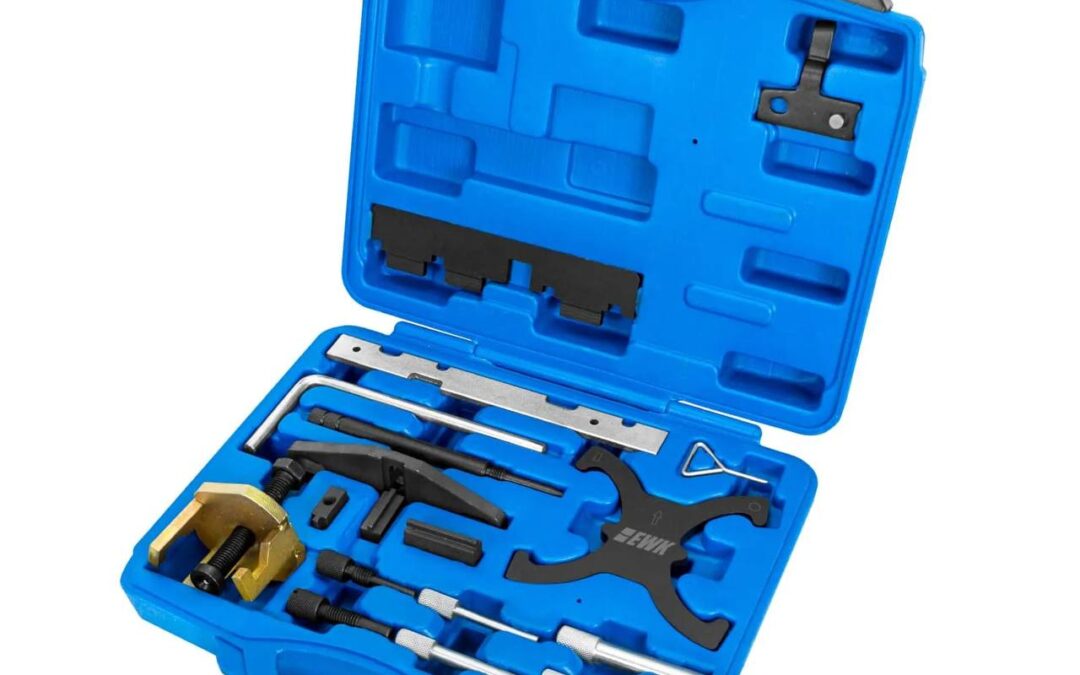
The Complete 4-Piece Ford Escape Timing Kit
Proper timing on the Ford Escape 1.6L turbo requires all four timing tools:
- Crankshaft positioning pin – Holds the physical crankshaft in position
- Camshaft phaser holding tool – Secures the variable cam timing actuators/sprockets
- Harmonic balancer alignment tool – Critical because the balancer is not keyed to the crankshaft
- Camshaft positioning bar – Locks the rear of both camshafts in position
The camshaft positioning bar is frequently overlooked but essential. The camshafts are not keyed to the phasers, meaning you can hold the sprockets in correct position while the camshafts themselves are incorrectly positioned.
No-Start After Head Gasket Repair
When a Ford Escape 1.6L won’t start after head gasket work, timing is the most likely culprit. Key diagnostic indicators include:
- Engine cranks with audibly low compression across all cylinders
- Single spark event during cranking, then spark stops completely
- No timing-related diagnostic trouble codes initially
The single spark event followed by no spark is particularly telling – the PCM detects mechanical timing issues and stops attempting ignition. Cam and crank sensor correlation testing with an oscilloscope will confirm timing problems.
P130D Engine Knock Code After Timing Work
The P130D code (Engine Knock Combustion Performance) can appear on Ford Escape 1.6L engines even when timing appears correct. This code indicates the knock sensors are detecting detonation, often caused by using the wrong length crankshaft positioning pin.
Timing kits, especially aftermarket versions, include multiple pin lengths for different Ford and Mazda engines. Using an incorrect pin length positions the crankshaft slightly off, creating a timing mismatch that the PCM doesn’t recognize as a timing fault but causes enough detonation to trigger knock sensors.
Diagnosing P130D on Ford Escape
When P130D appears after timing work:
- Verify audible knock during acceleration or power brake testing
- Check cam/crank correlation with oscilloscope – may appear normal
- Confirm correct crankshaft pin length was used in timing kit
- Reference Ford service information for proper pin part number
What This Means for Your Shop
Ford Escape 1.6L turbo engines require precise timing procedures and quality tools. Cutting corners on timing kits or missing components will result in comebacks and additional diagnostic time. Always use complete, engine-specific timing kits and verify all components before beginning work.
When quoting head gasket work on these engines, inform customers about potential block cracking that could require engine replacement. This transparency prevents surprise costs and maintains customer trust.
Professional Module Programming and Diagnostics
Complex timing and programming issues on Ford vehicles require specialized diagnostic equipment and expertise. ST Mobile Auto provides on-site Ford module programming and advanced diagnostics throughout the Twin Cities metro area, helping shops resolve challenging problems efficiently.
For timing-related diagnostic support or Ford module programming services, contact ST Mobile Auto at (612) 355-9566 or submit a service request at https://stmobileauto.com/shop-forms/.