Honda/Acura Keyless Module Key Fix
By Mike Lundgren
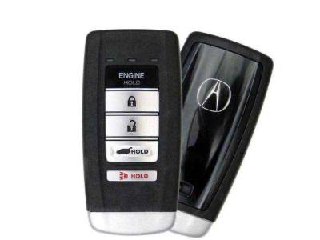
When a keyless access module registration fails on a 2018 Acura RDX or similar Honda/Acura vehicle, the culprit might be hiding in plain sight. A second key anywhere in the vehicle—even wedged between seats—will block the entire registration process, causing failures at the key learning stage regardless of which diagnostic tool you’re using.
Why Keyless Access Module Registration Fails
The keyless access control unit serves as the primary immobilizer module on modern Honda and Acura vehicles, managing proximity key recognition and coordinating with the engine control module and body control module for vehicle startup authorization. When this module is replaced, it must be registered to the vehicle through a specific process that teaches the keys to the new module.
Unlike traditional transponder systems that use short-range communication, Honda’s proximity key system operates through RF signals. During the registration process, the keyless access module sends out a low-frequency signal (125 kHz) to locate keys, and the keys respond with high-frequency signals. The critical requirement: only one key can be present in the vehicle during this process.
The Diagnostic Process That Reveals Hidden Keys
When registration consistently fails at the key learning stage across multiple tools—including aftermarket scanners like Autel and TopDown, as well as Honda’s factory HDS tool—the issue often points to multiple keys being detected simultaneously.
To diagnose this condition:
- Install the original keyless access module temporarily
- Remove all known keys from the vehicle
- Attempt to start the vehicle using the push-button start
- If the vehicle still keys up and starts, another key is present somewhere in the vehicle
A proximity key tester can also detect when multiple keys are responding to the system’s polling signals during the registration attempt.
Common Hiding Spots for Secondary Keys
Secondary keys often end up in unexpected locations:
- Wedged between seats and center console
- Hidden in glove compartments or door pockets
- Stashed under dashboards (especially in vehicles with aftermarket remote start systems)
- Left in cup holders or storage compartments
Honda 9-Speed Transmission Immobilizer Consideration
On Honda and Acura vehicles equipped with 9-speed transmissions, the transmission control module (TCM) is also part of the immobilizer system. If a TCM is replaced on these vehicles, it must be registered within the immobilizer system or the vehicle will remain in an immobilized state, appearing completely unresponsive when the start button is pressed.
Tool Requirements and Workarounds
While aftermarket tools like Autel and TopDown can handle most Honda keyless access module registrations, some newer vehicles may require Honda’s factory HDS tool with security professional subscription and NASIF credentials. The HDS system also requires purchasing a Honda key code for each VIN to generate the necessary PCM code for immobilizer access.
For vehicles that won’t key up due to immobilizer issues, most aftermarket scan tools can force the ignition on by detecting the push-button start system and prompting you to hold the start button while connected.
What This Means for Your Shop
This diagnostic challenge highlights why thorough vehicle inspection is crucial before beginning any immobilizer work. Always verify how many keys should be with the vehicle and physically search for any additional keys before starting the registration process. The time spent on this initial check can save hours of diagnostic work later.
For shops encountering consistent registration failures, the issue may not be tool-related or part number-related—it could be as simple as a customer’s spare key that fell between the seats months ago.
Expert Module Programming Services
When keyless access module registration becomes complex or requires specialized Honda factory tools, ST Mobile Auto provides on-site programming services throughout the Twin Cities metro area. Our team handles the complete registration process, including the diagnostic steps needed to identify hidden keys or other system conflicts that prevent successful programming.
For challenging immobilizer cases or when you need access to manufacturer-specific tools and procedures, contact ST Mobile Auto at Ready to schedule programming services? Visit our service request form to get started.
Need Help With This?
We handle jobs like these every day for shops across the Twin Cities.