Blind Spot Module Angle Calibration
By Mike Lundgren
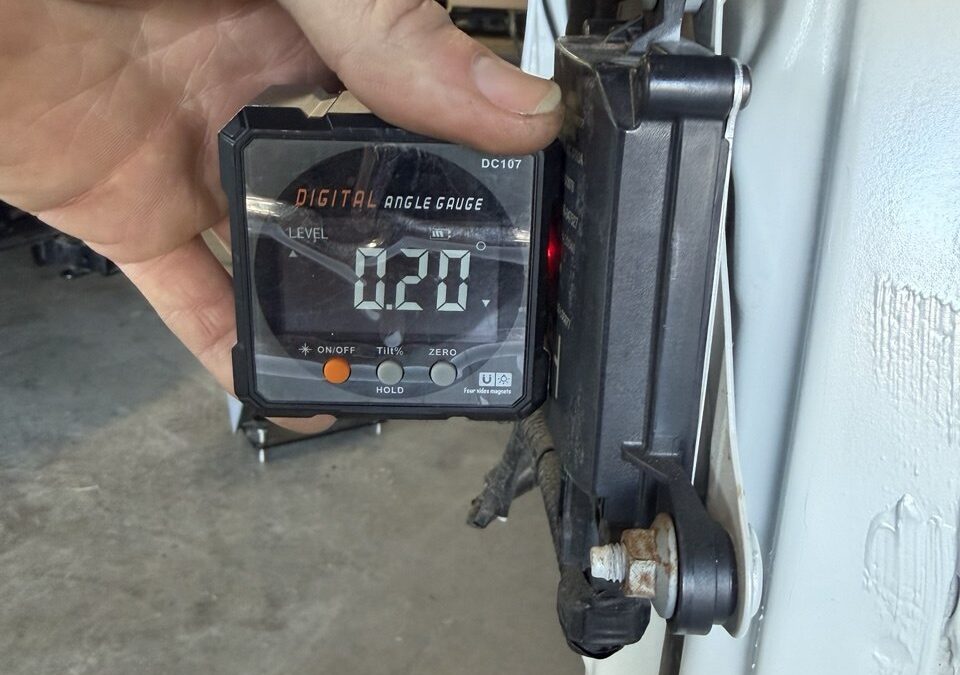
Blind spot module calibration requires more than just setting up a radar cone at the correct distance. The physical angle of the sensor itself must be verified before attempting calibration, or you’ll face failures in the shop or customer comebacks after the vehicle returns to service.
Why Physical Angle Verification Is Critical
When blind spot modules are replaced or when there’s structural damage to a vehicle, the sensor’s mounting angle can be off by several degrees. The calibration process can only compensate within a narrow threshold—typically just a couple of degrees. If the sensor is physically misaligned beyond this range, one of two things happens:
- The calibration fails to complete in the shop
- The calibration passes initially but fails during real-world driving, triggering warning lights
This is especially common after collision repairs where brackets may have shifted or rear quarter panels have been damaged. Even if a bracket appears undamaged, structural tweaking can throw off the precise angles these sensors require.
The Two Critical Angles to Measure
Vertical Angle (Easy to Measure)
Most blind spot modules need to be positioned at exactly 90 degrees relative to the ground—perfectly vertical. This is straightforward to verify using a digital angle gauge placed against the sensor face. Some manufacturers may specify slightly different angles, so always check service information, but 90 degrees is the standard for most applications.
Horizontal Angle (The Tricky One)
The horizontal angle is where most technicians run into trouble. Unlike front radar sensors that point straight ahead (perpendicular to the vehicle centerline), blind spot modules are angled to detect vehicles in the specific blind spot zone. This angle varies significantly by manufacturer and model—anywhere from 30 to 70+ degrees relative to the vehicle centerline.
You cannot eyeball this angle accurately. A 5-degree error at a 45-degree angle is nearly impossible to detect visually but will cause calibration problems.
Measuring Tools and Methods
Several approaches exist for measuring horizontal angles:
Manufacturer-Specific Tools
Hyundai/Kia offers a specialized tool with a laser that mounts to the bracket for precise angle measurement. While effective, it only works on their vehicles.
Universal Solutions
Commercial tools like Autel’s angle verification kit include a mat with measurement lines, a metal stand, and an angle gauge. While functional, the $2,100+ price point may be prohibitive for many shops.
Custom Solutions
Some shops have developed custom measurement systems using:
- A metal stand with adjustable mounting points
- Floor mats with precise angle markings
- Laser pointers aligned with the sensor face
- 3D-printed mounts for different sensor shapes
When to Perform Angle Verification
Always verify angles when:
- The vehicle has been in a collision affecting the rear quarters
- Blind spot modules have been replaced
- Rear bumpers or quarter panels have been repaired
- Previous calibration attempts have failed
- The vehicle is a salvage/total loss rebuild
Finding Angle Specifications
Angle specifications can be found in:
- OEM service information (though not always clearly stated)
- Autel’s ADAS coverage database (free access)
- Tool manufacturer documentation
- Comparison with the undamaged side (if applicable)
What This Means for Your Shop
If you’re performing blind spot calibrations, skipping angle verification is a recipe for comebacks and customer dissatisfaction. The time invested in proper measurement upfront prevents the need for return visits and maintains your reputation for quality work.
For shops without the proper measurement tools, this represents a significant challenge. The specialized equipment required and the technical expertise needed make this an ideal service to outsource to ADAS specialists.
Professional ADAS Calibration Services
ST Mobile Auto provides comprehensive blind spot module calibration services throughout the Twin Cities metro area, including complete angle verification before calibration. Our team brings the specialized tools and expertise needed to ensure calibrations are completed correctly the first time.
We perform on-site calibrations at your shop, eliminating the need for you to invest in expensive measurement equipment or tie up bay space. Our service includes both the physical angle verification and the electronic calibration process.
Contact ST Mobile Auto at
Need Help With This?
We handle jobs like these every day for shops across the Twin Cities.